208
Leadership panel registrations
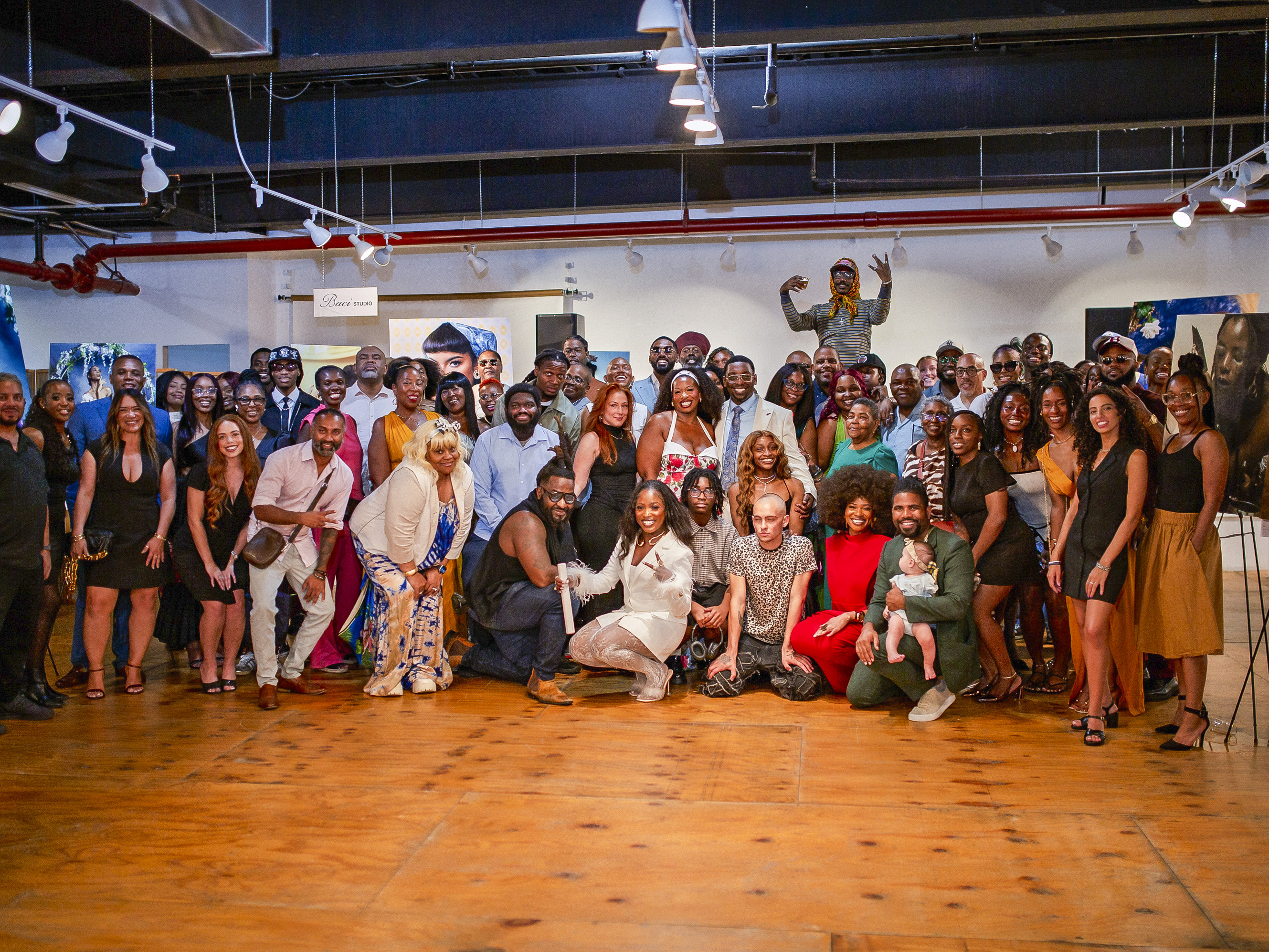
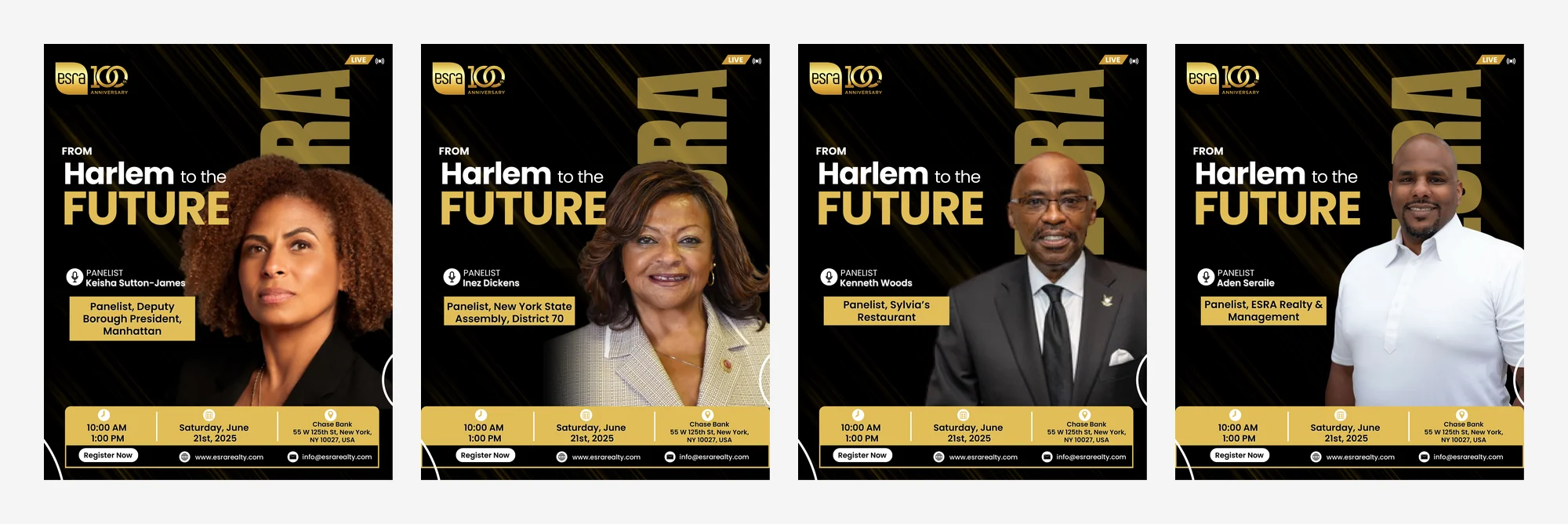
For the June 21, 2025 From Harlem to the Future leadership panel.

CORPORATE ANNIVERSARY CAMPAIGN / BRAND STORYTELLING
For 100 years, ESRA Real Estate Companies built its name quietly. Its 100th year became a campaign that put a century of Harlem history, leaders, and relationships in public view.
At a glance
The challenge
Telling 100 Years of Harlem Real Estate and Family History as One Cohesive, Relevant Story
What we did
From Historical Discovery to a Year of Public Storytelling
The result
A More Visible Legacy and New Reasons to Connect
01 / THE BUSINESS CONTEXT
For 100 years, ESRA Real Estate Companies has been part of Harlem’s business community. Three sisters from Guyana founded the family-owned company in 1925. It survived economic downturns, housing discrimination, and huge changes in New York City. Over three generations, it grew into a business that covers:
For most of that time, ESRA worked quietly. Its leaders built a respected business through relationships, skill, and decades of service. They did very little public marketing. Outside its network, few people knew the story.
The centennial was the moment to change that. ESRA’s 100th year could reintroduce the company to Harlem, the real estate industry, and a new generation of partners.
02 / THE CHALLENGE
ESRA had 100 years of real estate and family history in Harlem. The challenge was shaping it into one cohesive story that felt relevant to the people ESRA wanted to reach today.
THE CHALLENGE IN BRIEF
The story already existed. Our job was to bring it out and tell it well.
03 / THE CREATIVE RESPONSE
We started inside the company. Then we chose who should take part, how ESRA should show up, and which experiences would give people a reason to engage. One theme tied it all together: From Harlem to the Future.
WHAT WE DID / KEY DECISIONS
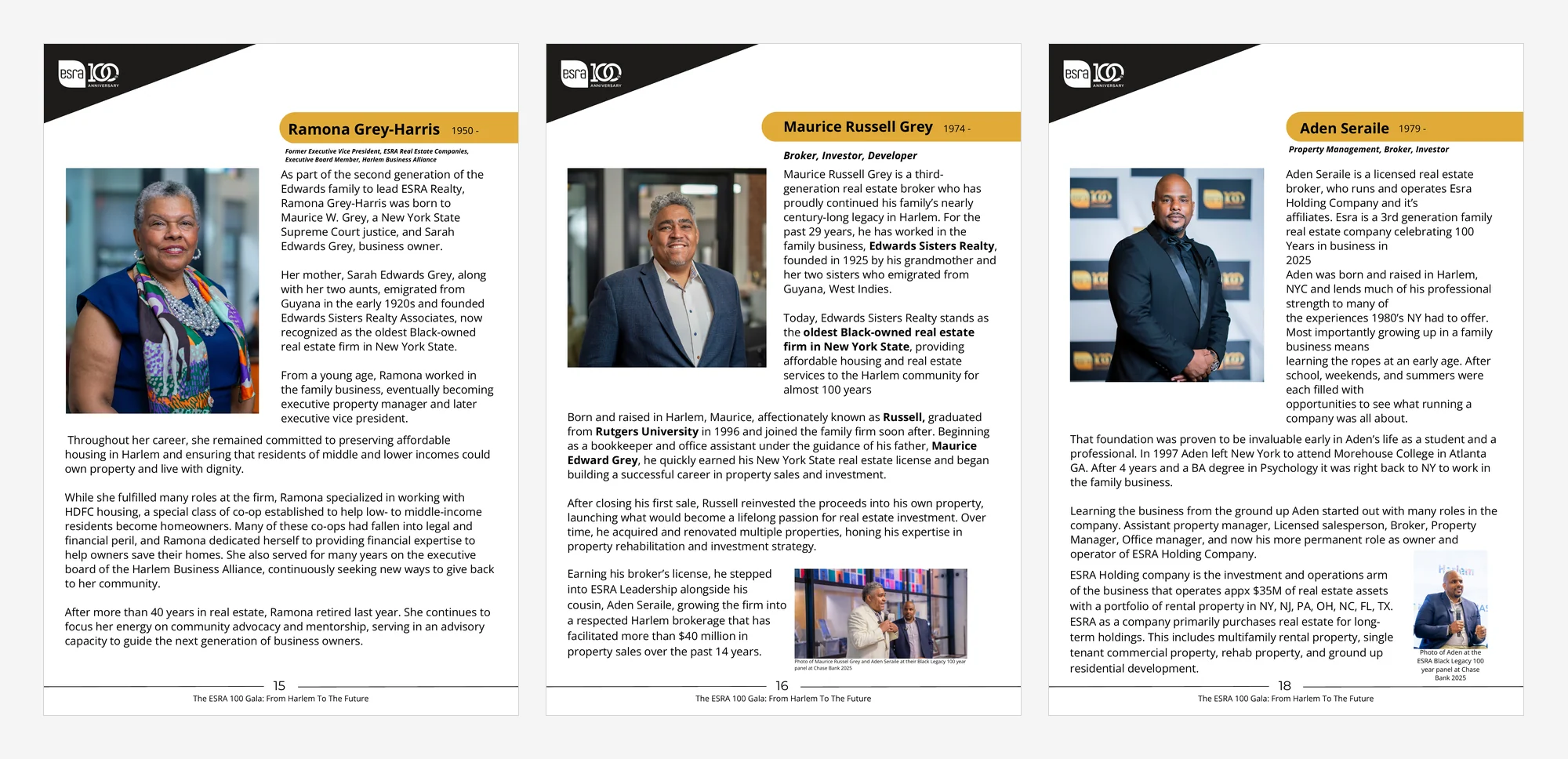
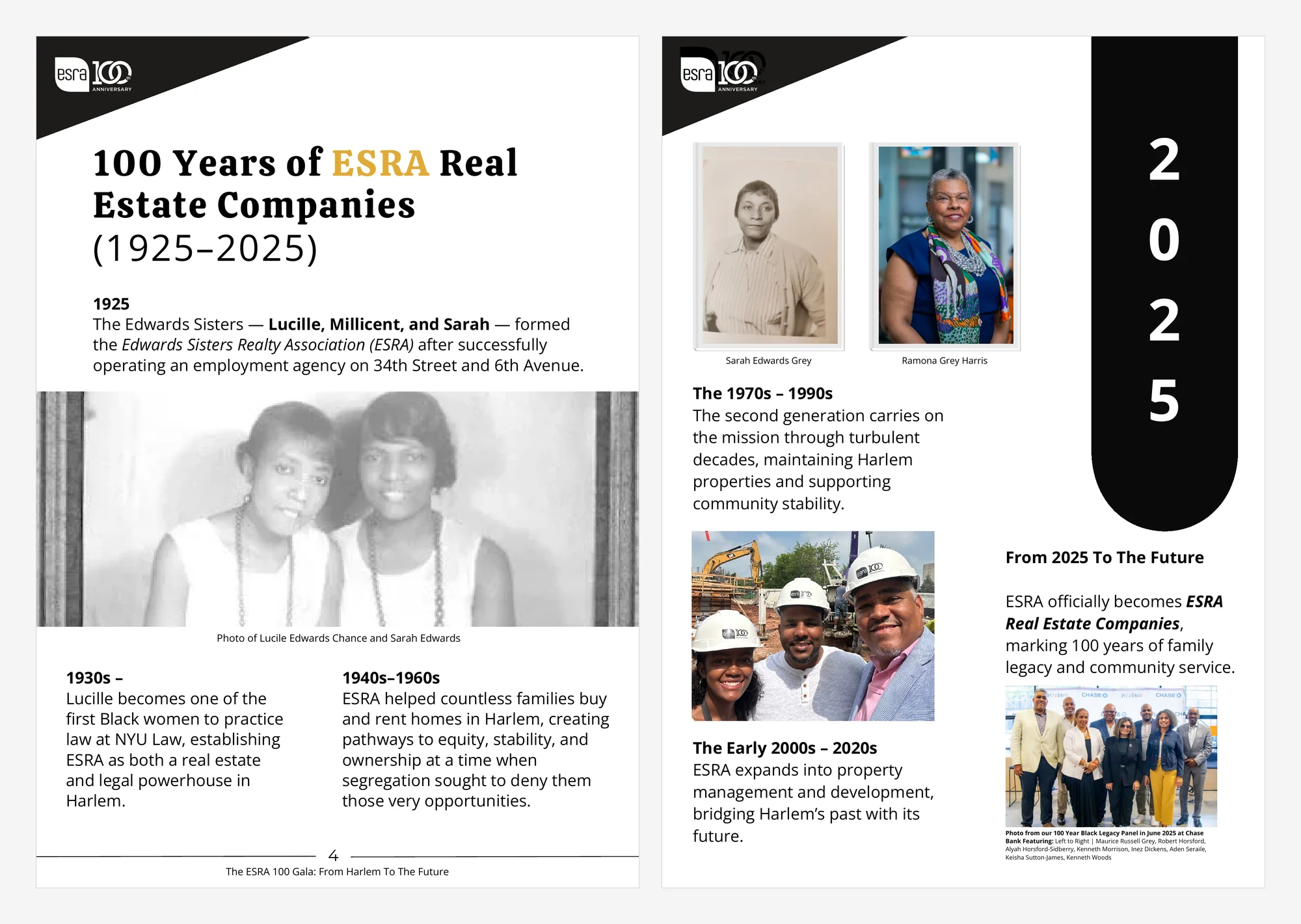
We began with the people who held the history: the family, the leadership team, and Ramona Grey-Harris. Ramona is a second-generation family member and a former executive vice president. She is also the family’s historian. We drew on the research gathered for the centennial journal, too.
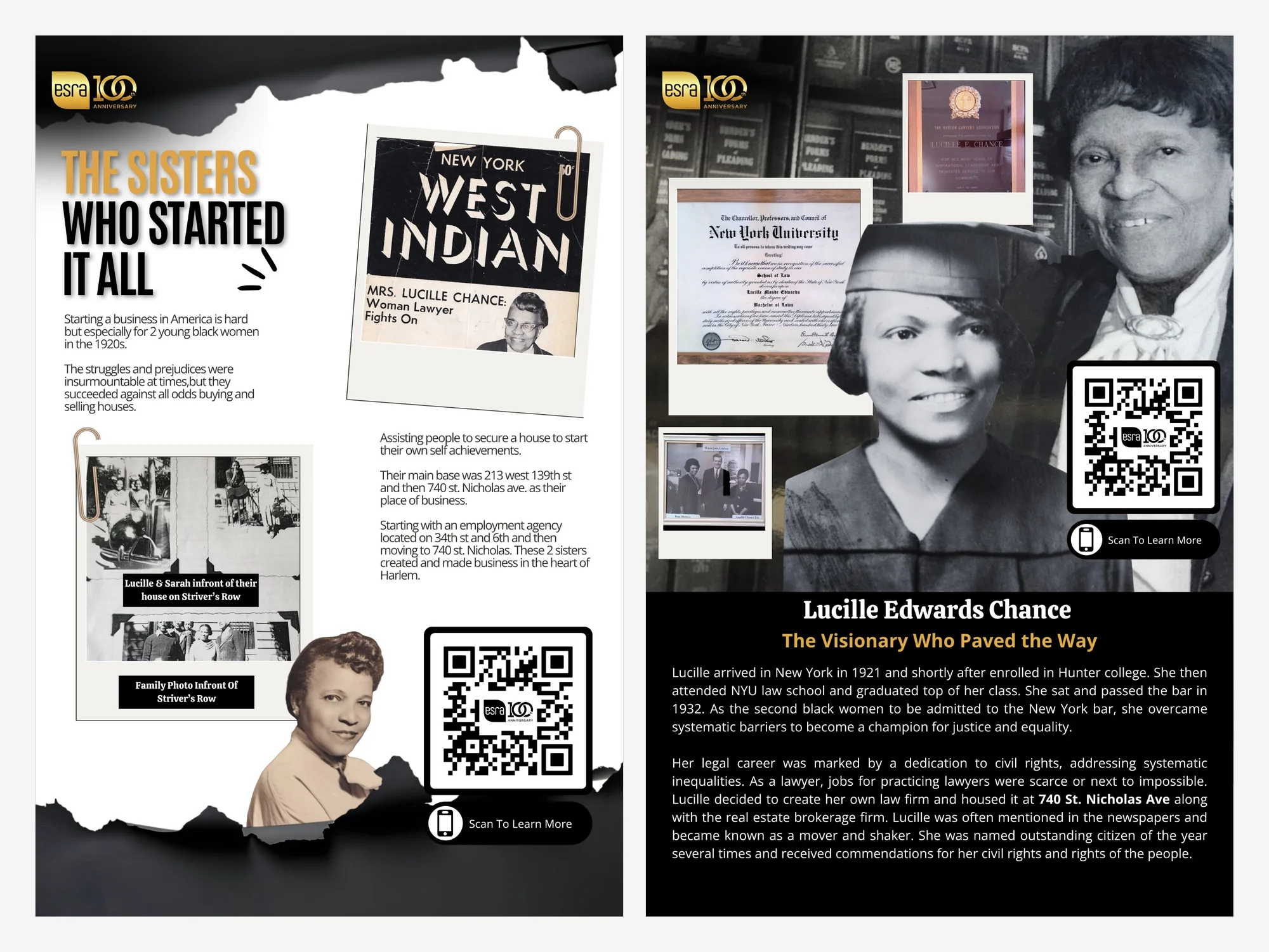
In 1925, Lucille, Millicent, and Sarah Edwards started the business that would become ESRA. They first ran an employment agency that found jobs for African Americans when few doors were open. Then they moved into Harlem real estate. There, they helped Black families find homes and buy property through decades of discrimination. Their first building on Strivers’ Row also gave relatives arriving from abroad a place to land.
People still tell the family how ESRA helped their relatives buy a first home. That memory, recorded in the journal, became the heart of the campaign.

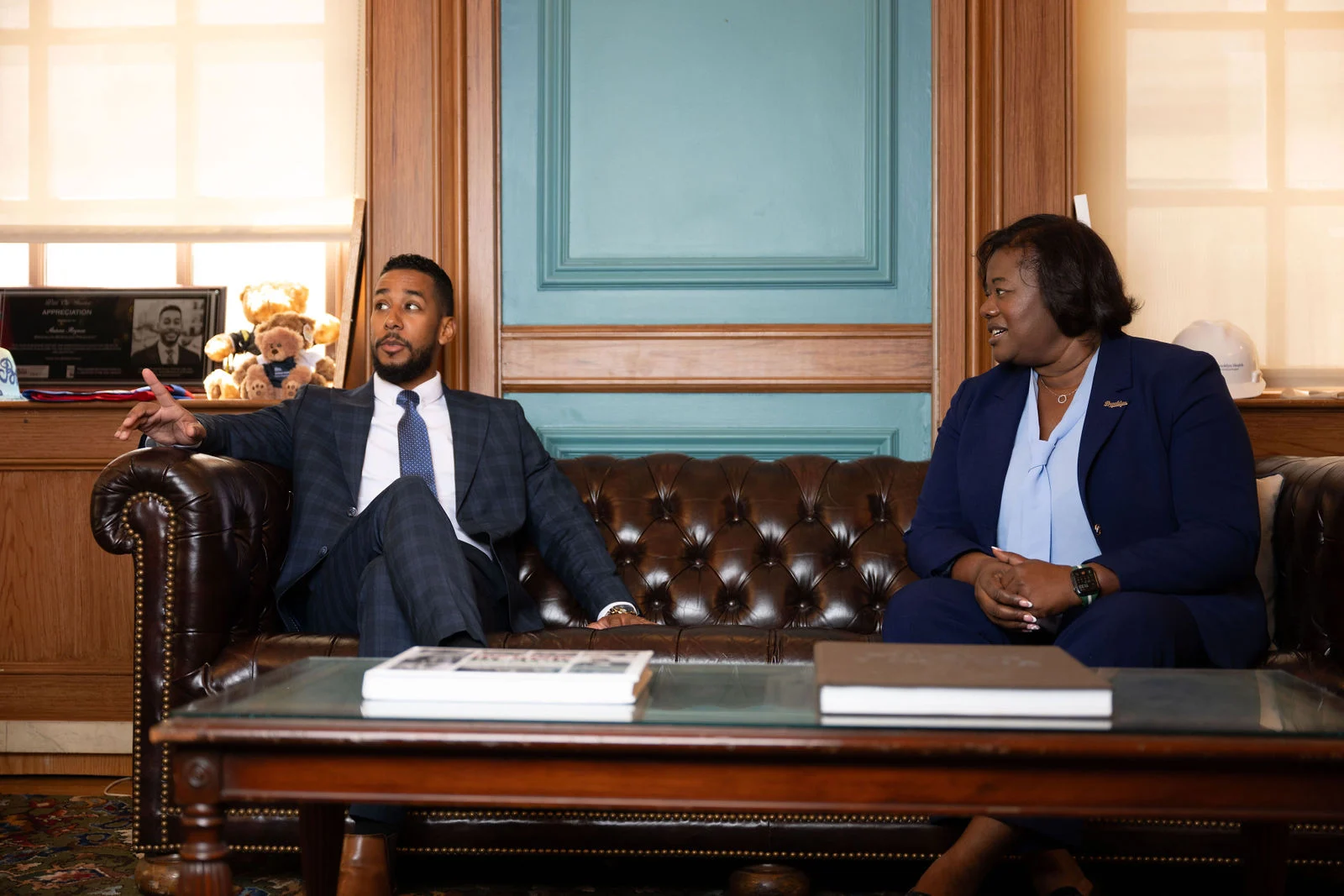
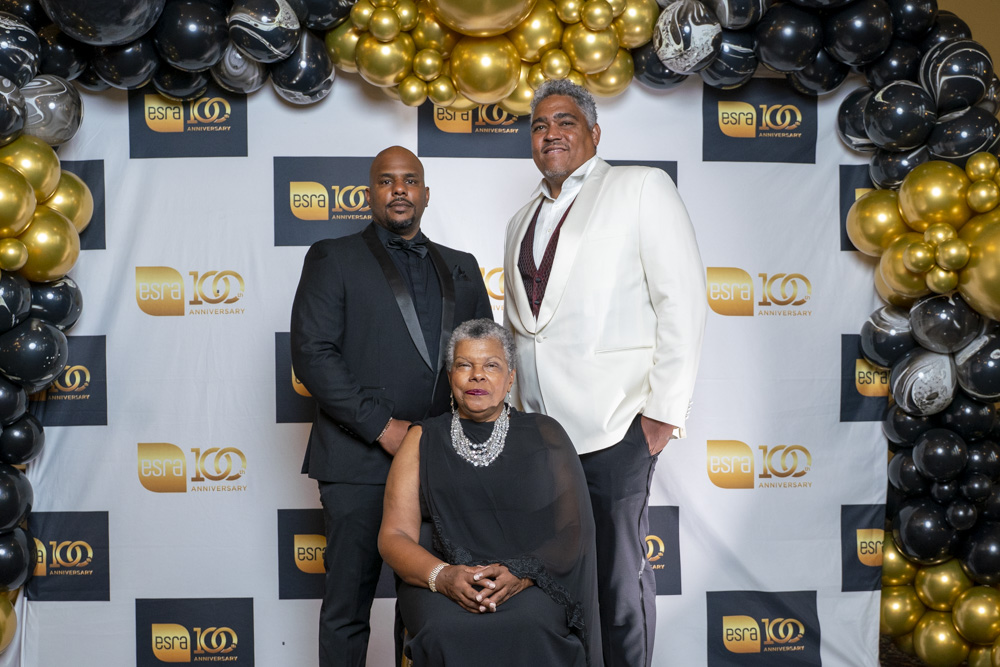
Third-generation leaders Maurice Russell Grey and Aden Seraile gave us the view from today. Their input set the campaign’s direction: honor the people who built the foundation, and introduce the leaders shaping what comes next. It also gave the campaign its theme, From Harlem to the Future.
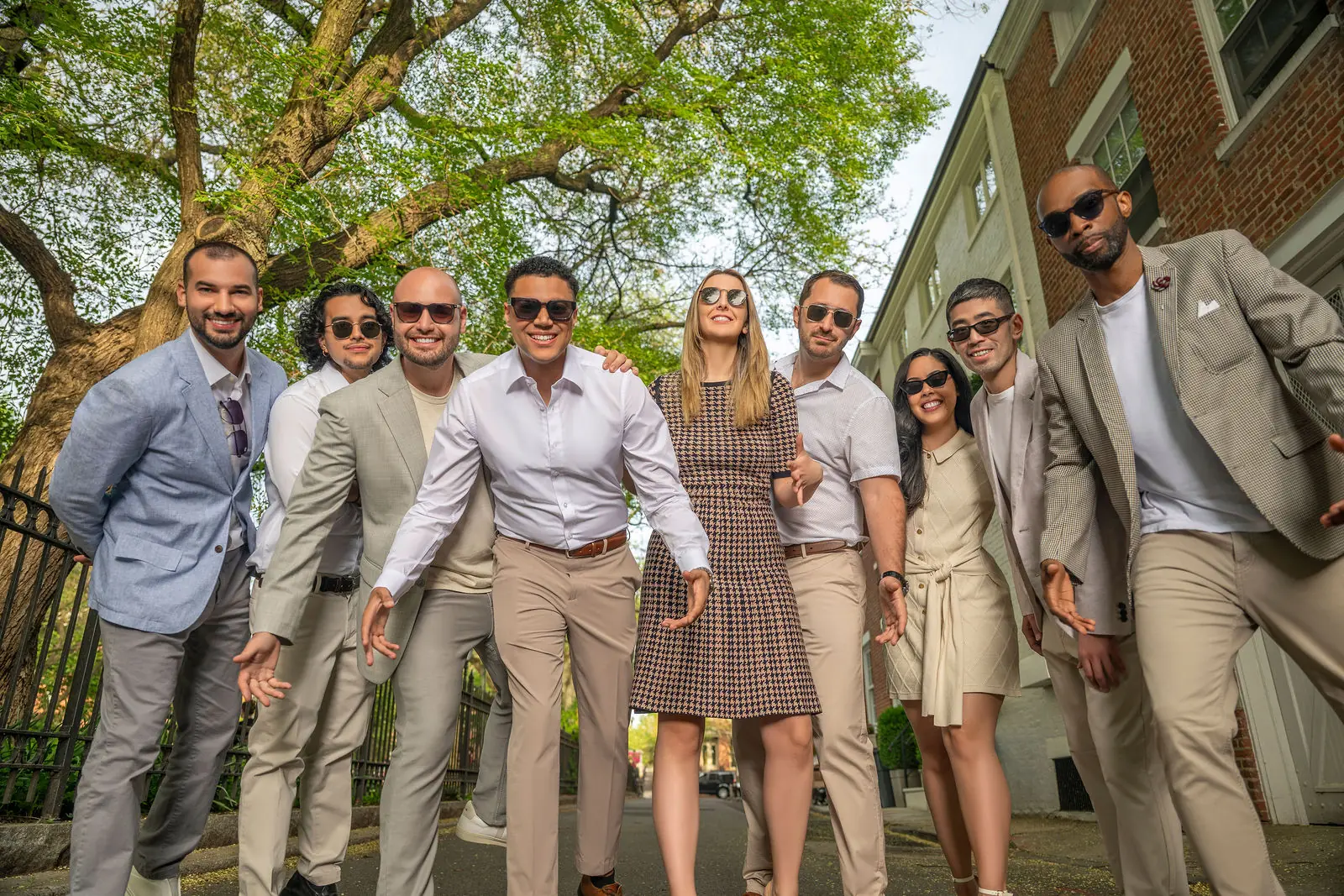
ESRA needed portraits for its anniversary. A year-long campaign also needed familiar faces and a steady flow of content. So we used the shoot to collect the team’s stories: what the legacy meant to them and where they saw the company going.
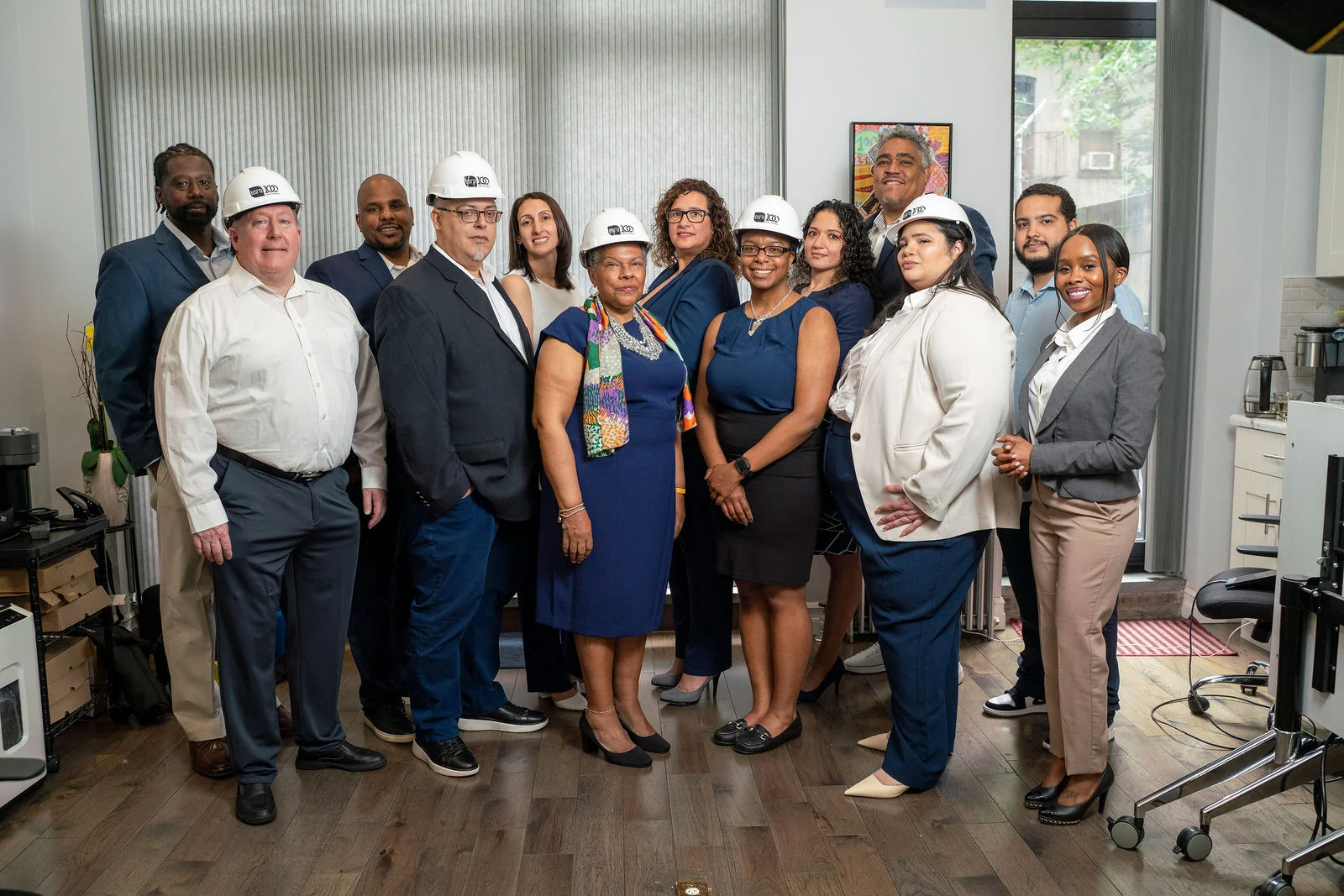
The lesson applies to any campaign: one shoot should feed many parts of your marketing.
ESRA hosted events for business leaders, neighbors, sponsors, partners, and guests. Each one had to feel worthy of a 100-year milestone. JFP Studios brought in a corporate event planner whose work includes events for several Vatican projects. That kept planning, storytelling, production, and the guest experience working from one plan.
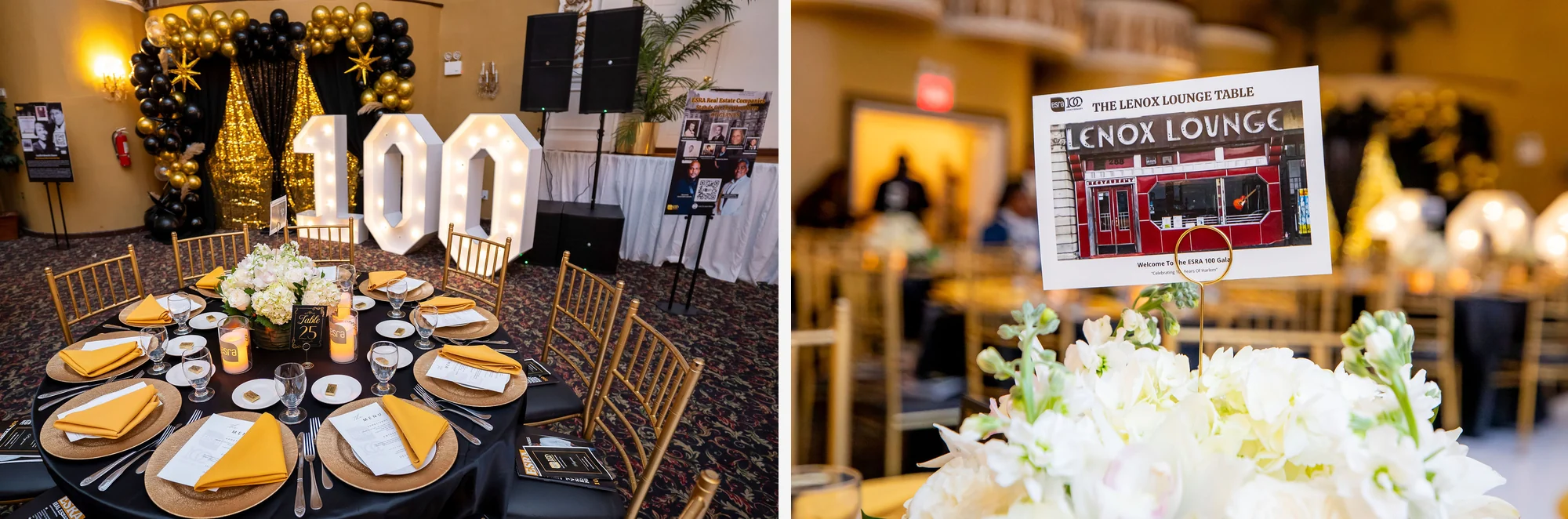
One announcement could not reintroduce a company. So the campaign carried From Harlem to the Future through a full year of:
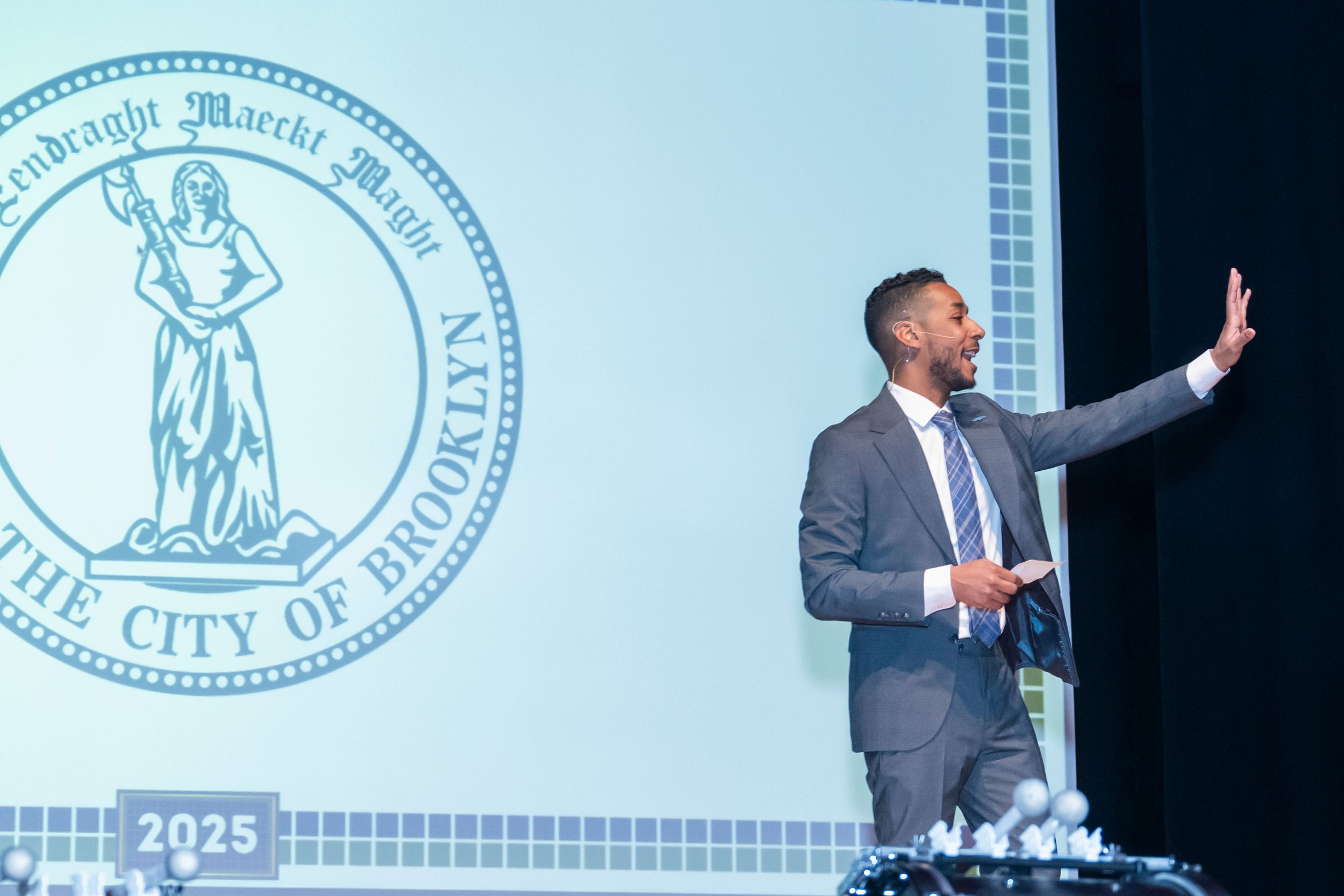
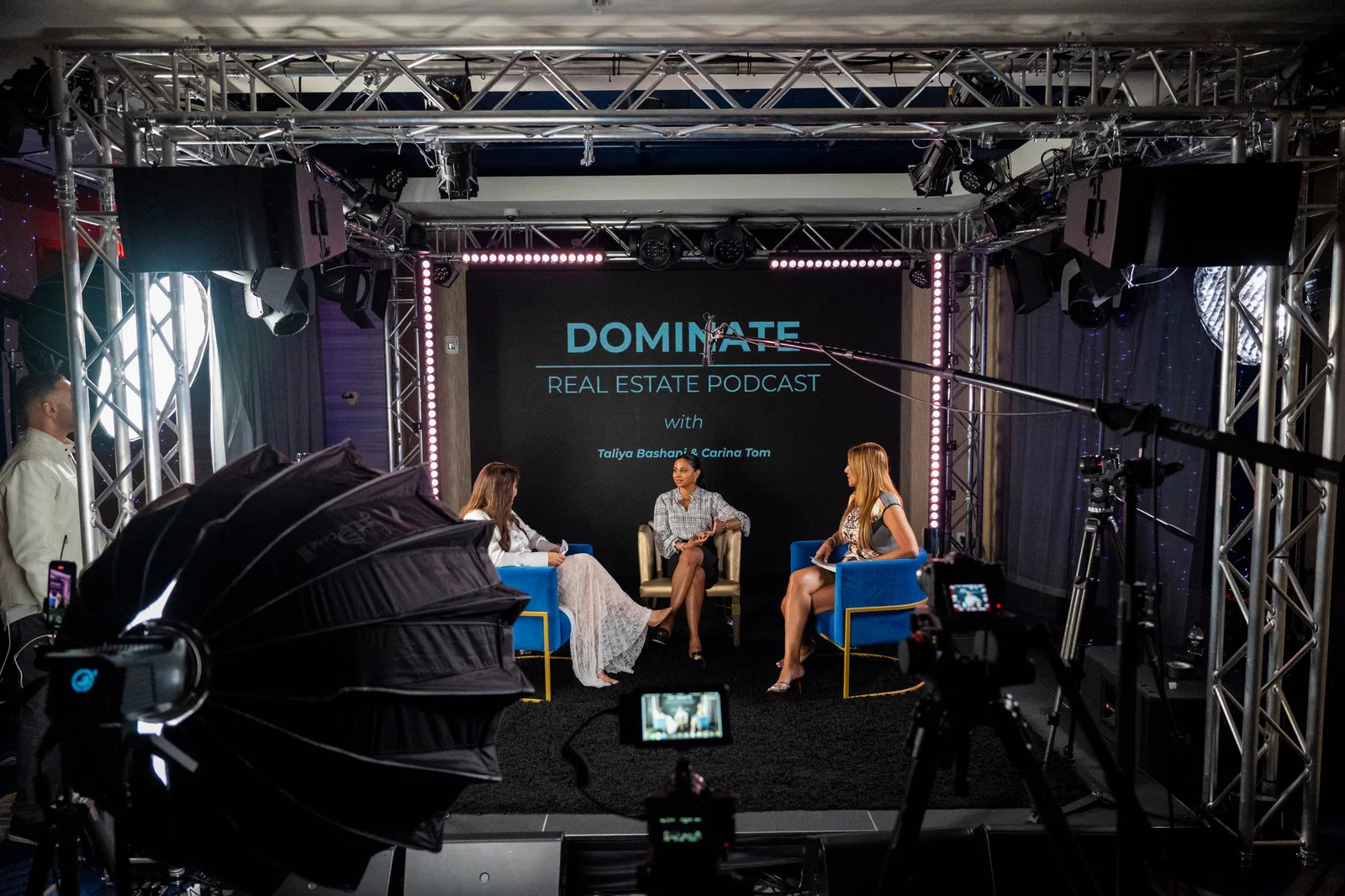
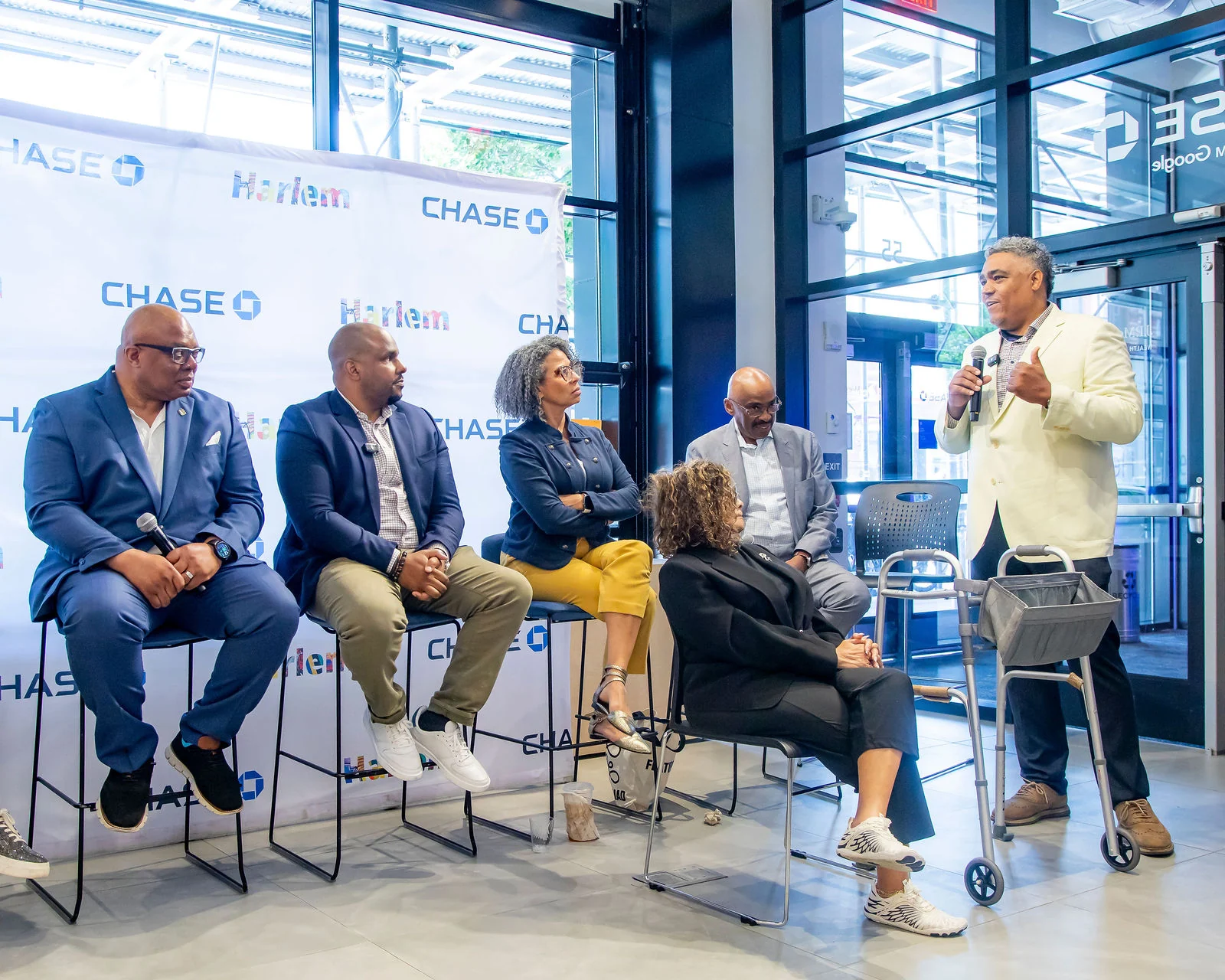
Business and community leaders talked about Harlem’s growth, legacy, and future. The panel introduced guests to ESRA’s leaders and business. It also led to video testimonials and new relationships.
A summer neighborhood event took the anniversary beyond ESRA’s business network. It brought the celebration to the Harlem neighbors at the center of the company’s story.
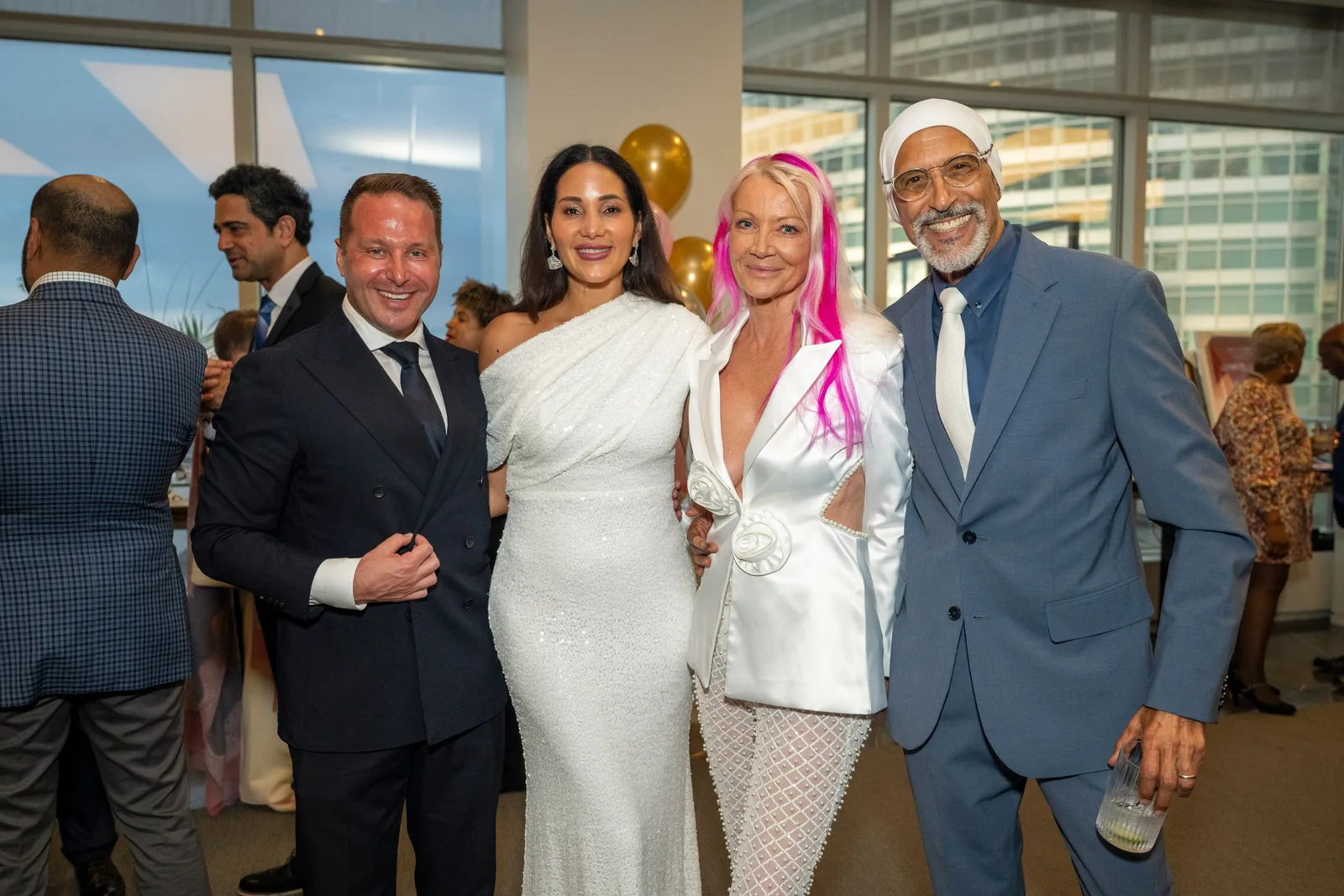
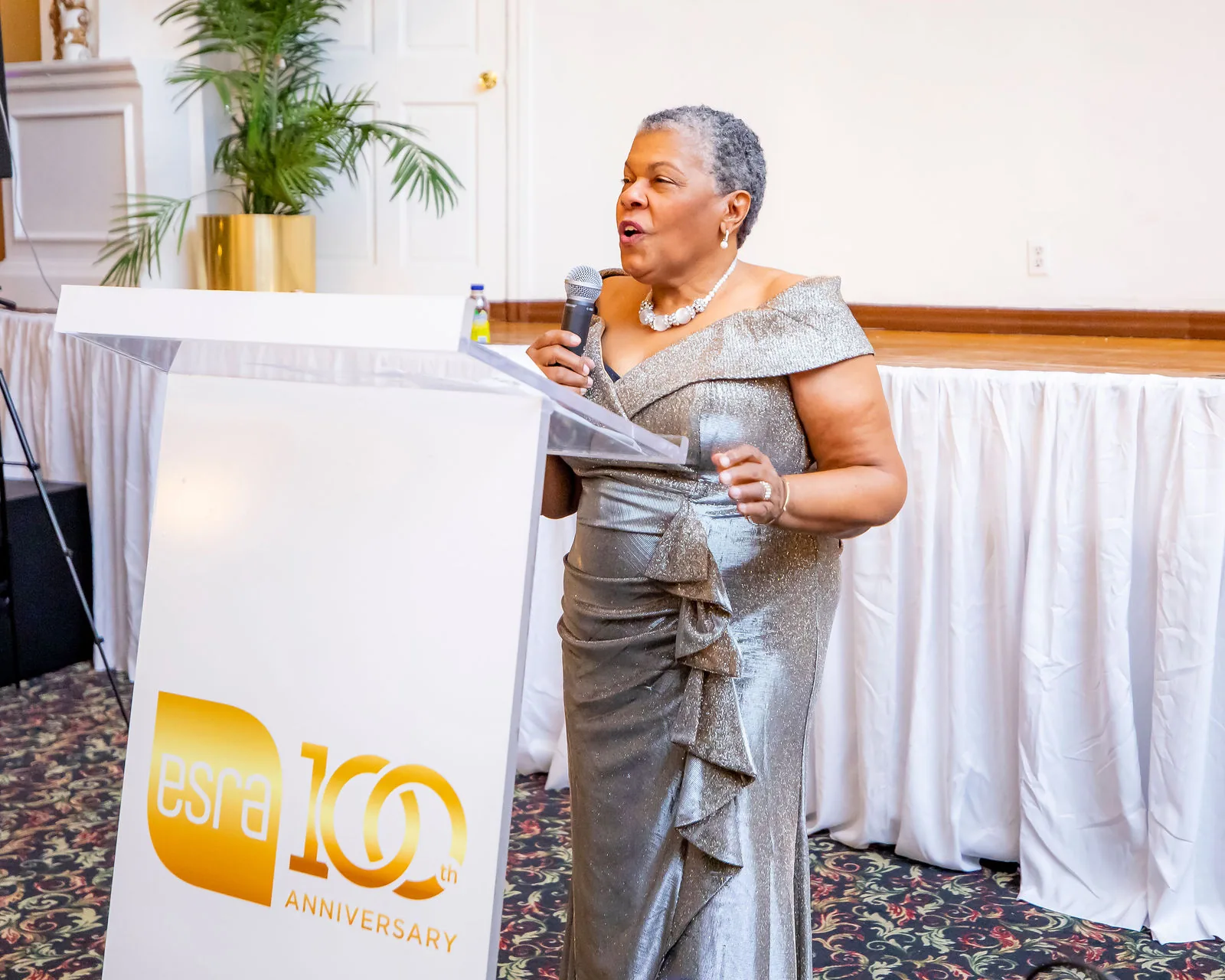
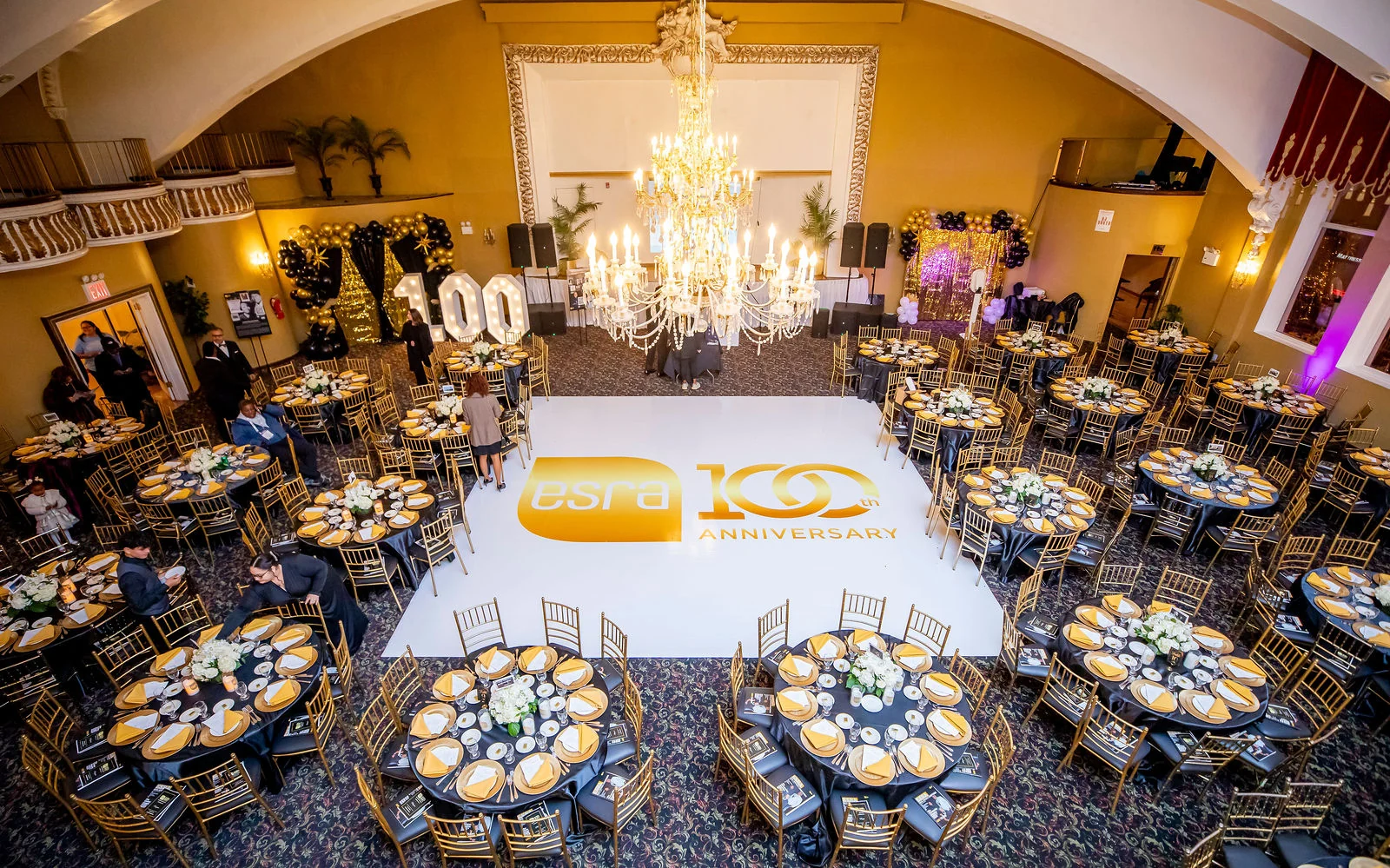
The year’s biggest moment came at Harlem’s Alhambra Ballroom. Leaders, family, partners, sponsors, and community groups came together to honor the legacy. The gala was also the campaign’s richest night for photos, video, and storytelling.
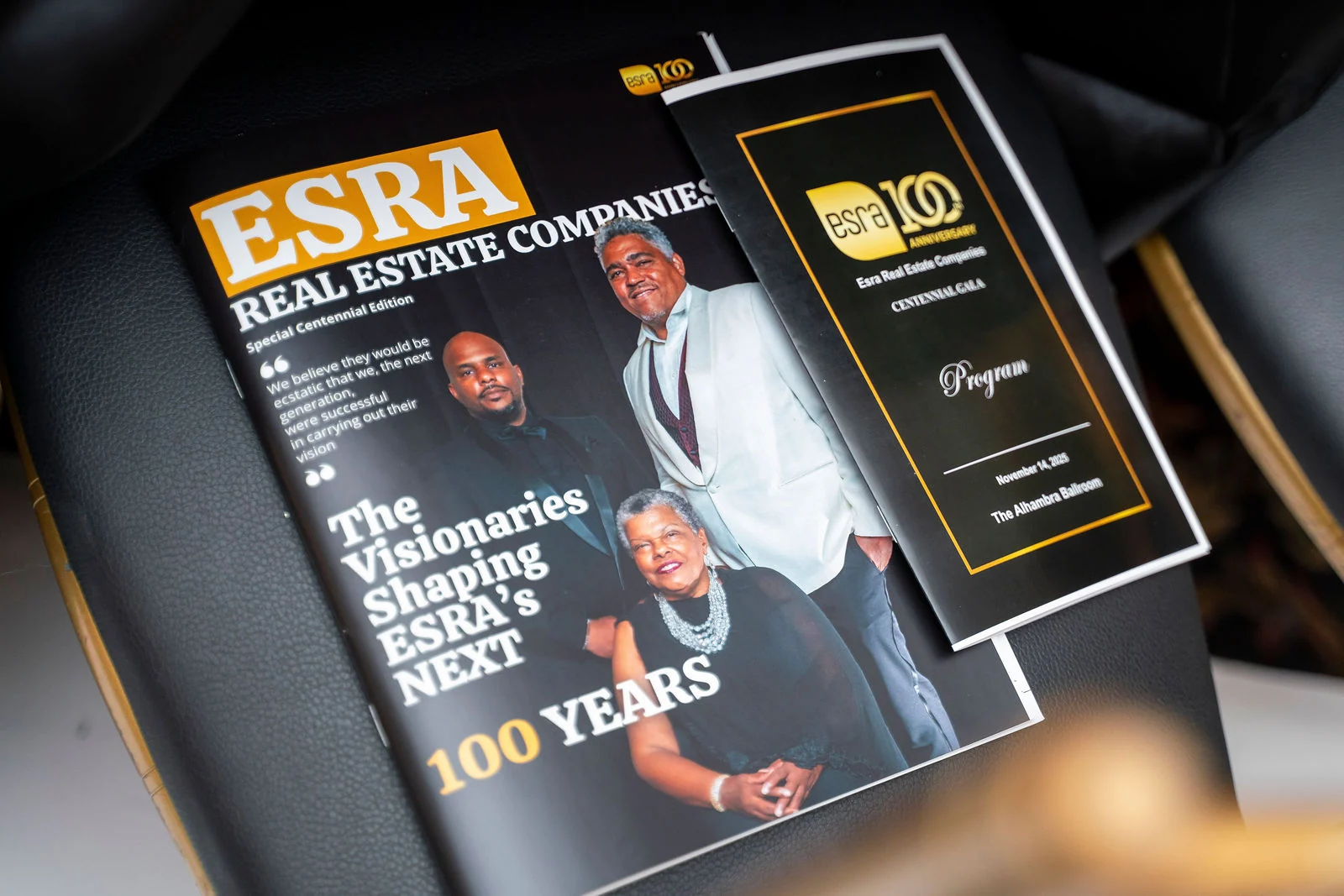
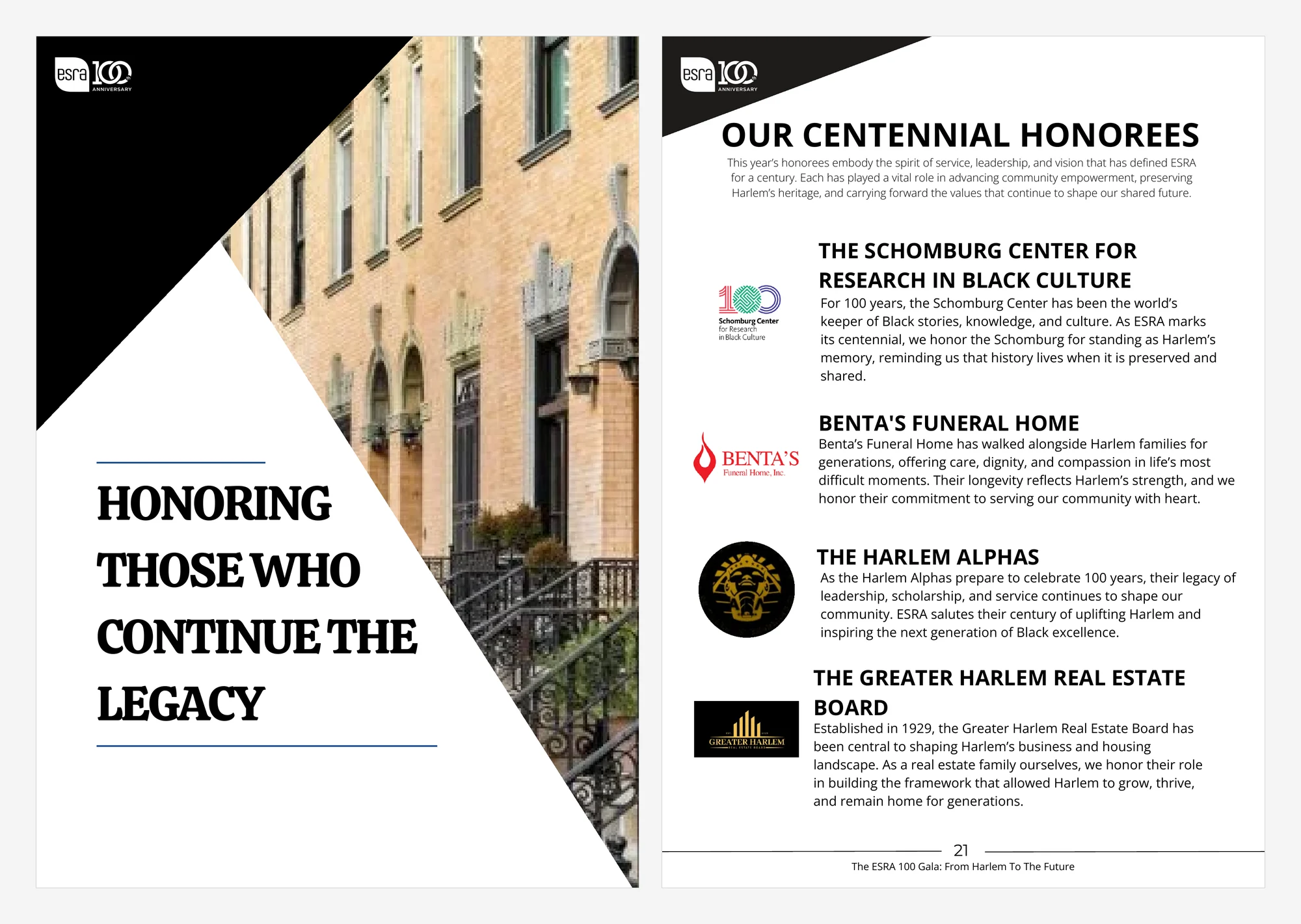
The commemorative journal brought the research together in print:
Together, these pages carried the campaign’s central idea: ESRA’s legacy was built by generations of people and relationships.
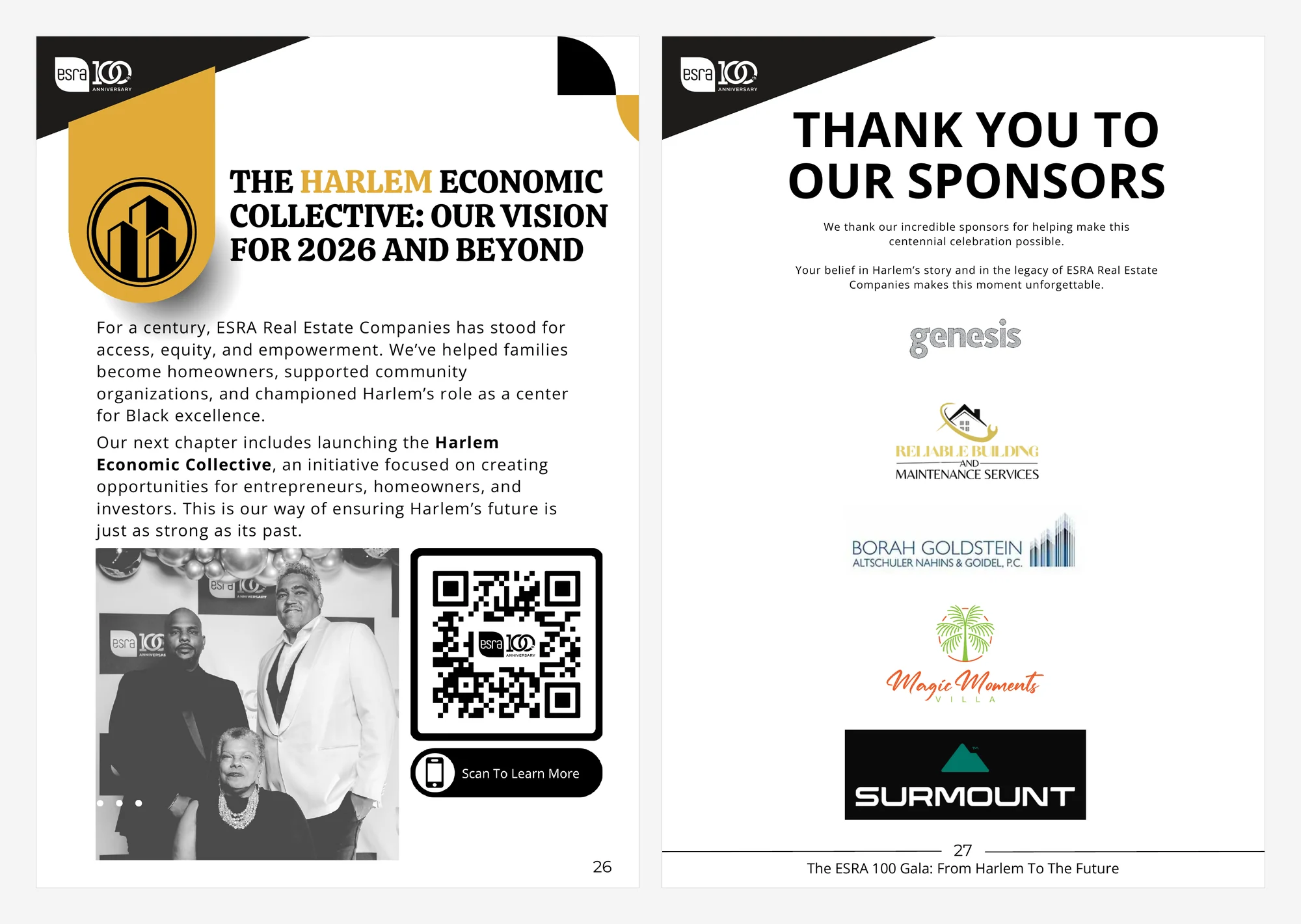
Between events, JFP Studios supported ESRA’s social media and content. Photos, interviews, archive material, short videos, and event coverage answered the questions a new audience would ask:
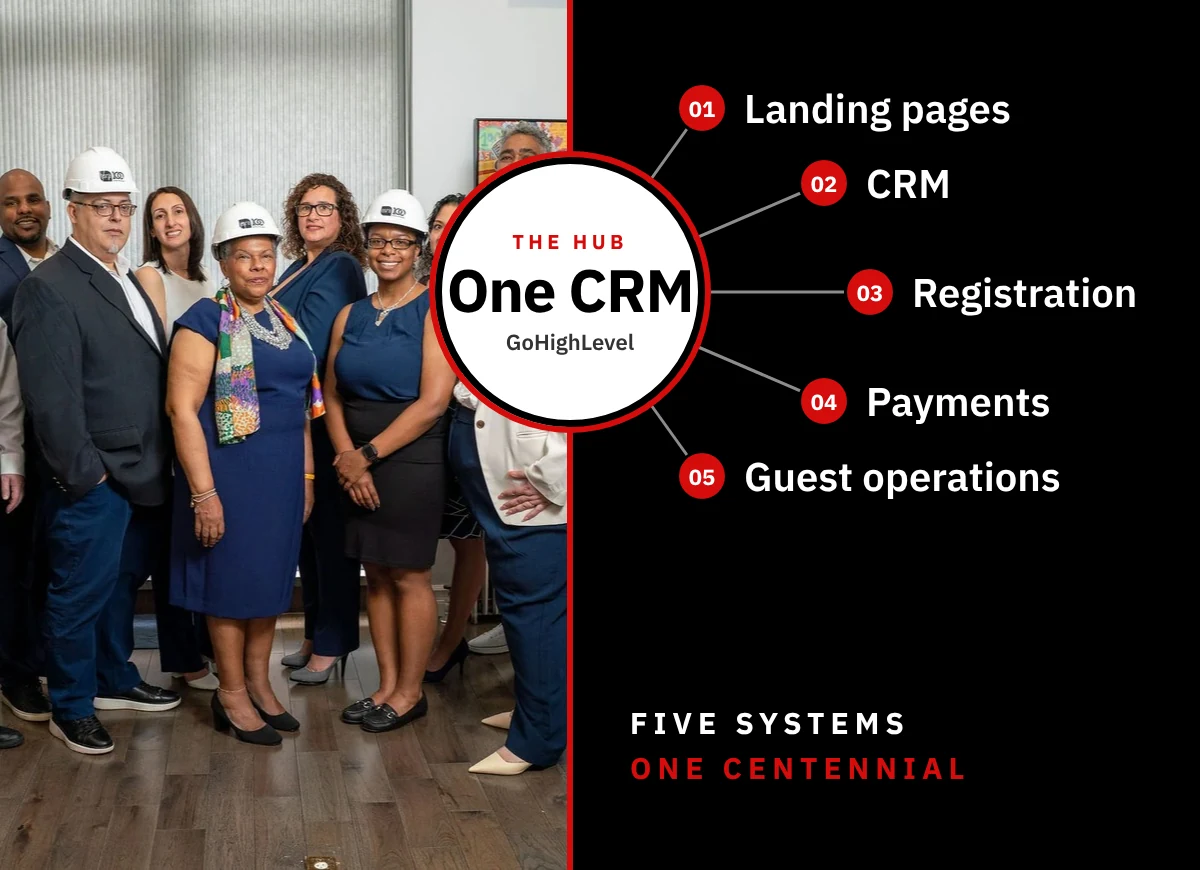
Landing pages, event sign-ups, emails, and a CRM let people respond, attend, and stay in touch. Our companion case study covers that system: How We Built the Marketing Infrastructure Behind ESRA’s Centennial Campaign.
THE BRAND PLATFORM / STRATEGY & IDENTITY
05 / THE RESULTS
For the June 21, 2025 From Harlem to the Future leadership panel.
Campaign reporting, February 1 to November 14, 2025.
Testimonials gathered during the panel campaign.
The centennial left ESRA with photos, videos, and stories it can reuse. It also gave people many chances to meet ESRA’s team, history, and current business.
Campaign reporting for February 1 through November 14, 2025 recorded:
ESRA kept a library of assets:
ESRA already had what a strong brand story needs: history, expertise, relationships, and people. Our work was finding those assets, choosing how to present them, inviting the team to take part, and keeping the public engaged for a full year. A company’s most valuable marketing assets are often the stories and relationships it already has.
Tie the milestone to a clear business goal. That might be more visibility, employee involvement, stronger relationships, or new conversations. A year-long plan creates more chances to connect than a single celebration.
New audiences may not know your years of expertise and relationships. Good storytelling makes that history easy to follow and links it to what you offer today.
Pair the portraits with interviews and a content plan. One session can then produce photos, employee stories, social posts, and article ideas.
Specialists bring planning skill and hands-on experience for complex live events. The campaign still keeps one strategy and one creative direction.
Look at reach, engagement, attendance, inquiries, and the business conversations that follow. Each signal tells you something different. None of them should be reported as closed revenue without proof.
Reported engagement and attendance describe campaign activity, not closed-contract revenue.
LET'S BUILD AROUND YOUR NEXT OBJECTIVE
We help established businesses find the stories, people, and expertise worth sharing. Then we turn them into campaigns, media, and experiences that build real relationships.
Book a strategy call